
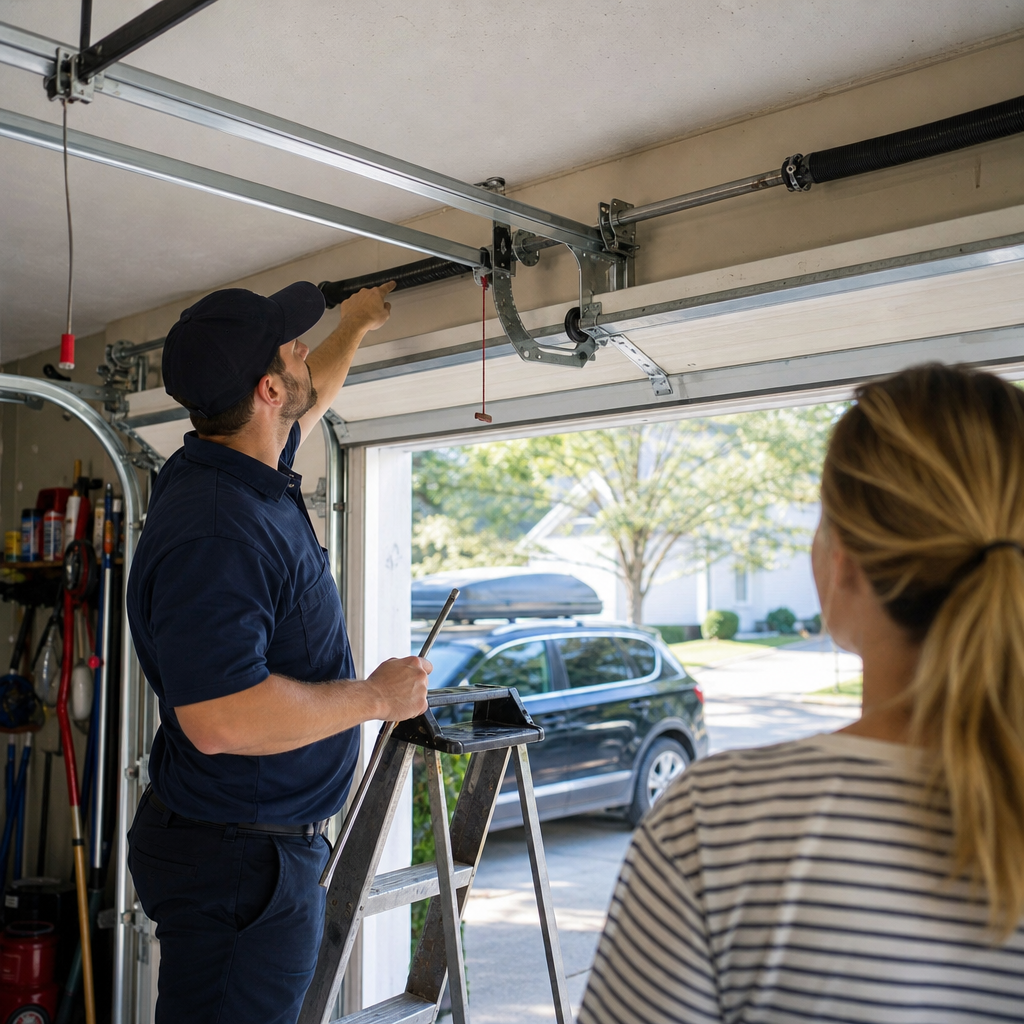
Why Does My Garage Door Reverse in Columbus, OH? The Real Answer Most Guides Miss
Your garage door reverses because the opener’s safety system detected resistance it interpreted as an obstruction — and in Columbus winters, the culprit is often a bottom seal frozen to the concrete threshold, not a broken opener. When overnight moisture wicks under that rubber seal and freezes, your opener’s force sensor correctly reads the bond as resistance and reverses rather than tear the seal off the door. That’s the opener doing its job, not failing. If you’re stuck now and need Emergency Garage Door Repair in Columbus, OH, call us at (877) 502-2559 — we stock replacement seals and can usually be out within hours.
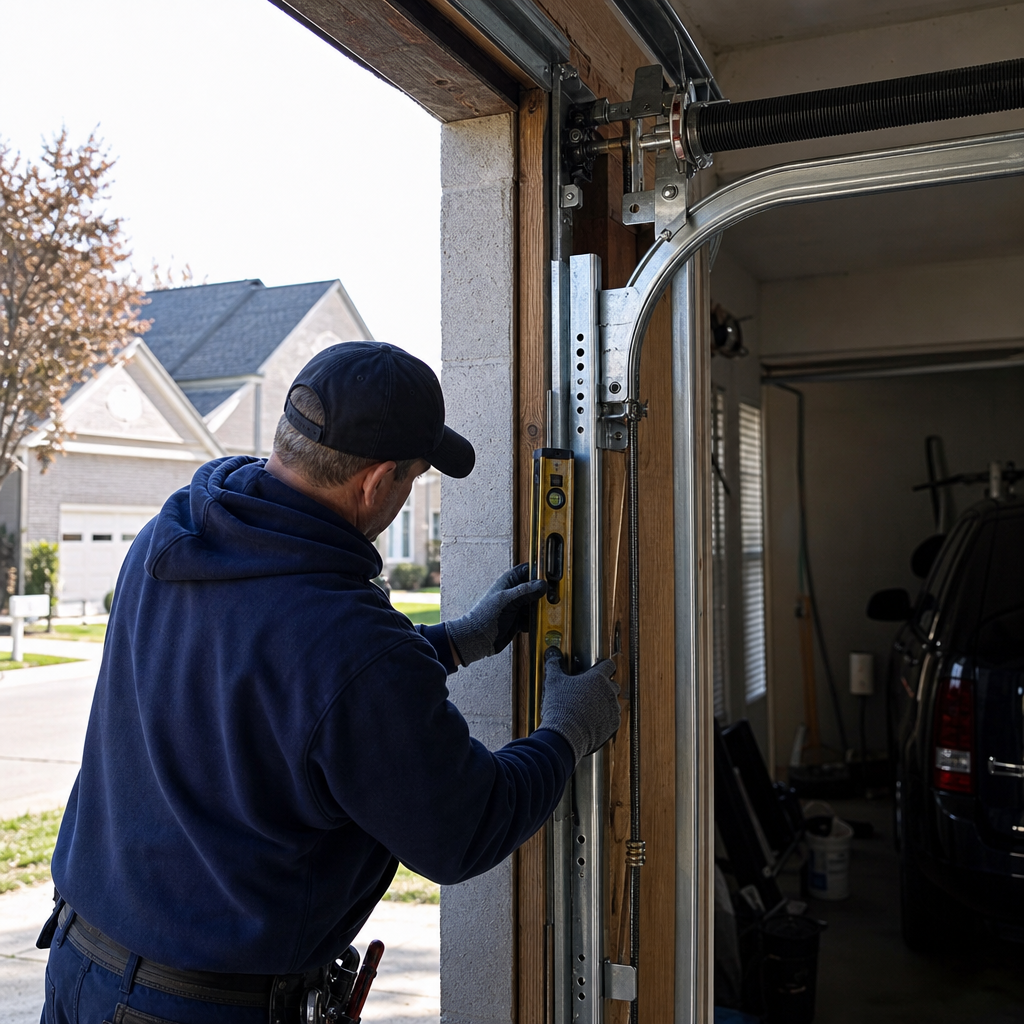
The Columbus Freeze-Seal Problem Nobody Talks About
Last February, after a freezing-rain event glazed Hilliard and Westerville, we fielded eleven calls before 9 a.m. — all the same story. Homeowner presses the button, door comes down, hits the floor, immediately shoots back up. Some had already cranked their opener’s force sensitivity to maximum. One had snapped a cable trying to yank the door free by hand.
Here’s what’s actually happening. Columbus sits in central Ohio’s freezing-rain belt, where ice storms hit more frequently than lake-effect cities like Cleveland. When temperatures drop below 28°F overnight, condensation and ground moisture migrate under the bottom rubber seal. By morning, that seal is bonded to the threshold like a tongue to a flagpole. Your LiftMaster, Chamberlain, or Genie opener — whatever brand you have — senses the resistance at the exact moment the seal starts to pull free. The auto-reverse engages. The door heads back up.
The kicker? This is correct behavior. The opener thinks it’s caught a child’s bike, a pet, a foot. It’s designed to reverse rather than crush or shear. The problem isn’t the motor — it’s the frozen interface between seal and concrete.
We’ve seen this pattern repeat across Columbus’s suburban ring for two decades. The 1990s–2010s subdivisions in Dublin, Grove City, and Reynoldsburg are particularly prone because their attached two-car garages typically face north or west, keeping thresholds shaded and cold longer after sunrise. Older neighborhoods like German Village and Clintonville see it too, though their detached carriage garages often have gaps that let air circulate, sometimes sparing the seal.
Steven Ramirez, our owner and lead technician, started tracking these calls seasonally after noticing the pattern in his early years. “I put my name on every door I touch — that keeps me honest,” he’ll tell you. That accountability means he’s not going to sell you an opener replacement when what you need is a $45 seal and five minutes with a heat gun.
Five Real Causes of Garage Door Reversal — In Diagnostic Order
Most online guides stop at four causes. We’ve added the frozen seal as #1 because in Columbus, it’s the seasonal leader from November through March. Run through this sequence before calling for service — it’ll save you time and money.
- Frozen bottom seal to threshold — Check first if it’s below freezing and the door reverses exactly at floor contact. Look for ice crystals or a visible bond between seal rubber and concrete. This is the most common winter cause in Columbus.
- Force/sensitivity limits out of calibration — Springs lose tension over time, especially with Columbus’s sharp freeze-thaw swings that accelerate metal fatigue faster than in Cincinnati or Dayton’s more stable climate. The opener interprets normal door weight as excess resistance. Never increase force settings to override a reversal without identifying the root cause.
- Photo-eye misalignment or obstruction — The infrared sensors at track bottom are knocked by lawn equipment, snow shovels, or settling concrete. Even spider webs or leaf debris can break the beam. LED indicator lights on the units show alignment status; steady vs. blinking patterns vary by brand.
- Damaged or bent track causing resistance — Impact from vehicles, rust from road salt, or gradual hardware loosening creates friction the opener reads as obstruction. Rollers may visibly bind or squeal before reversal occurs.
- Travel limit set too short — The opener thinks the floor is reached before the door actually seats, then reverses when it meets unexpected resistance. Common after DIY opener installation or when a heavier replacement door is installed without limit adjustment.
That diagnostic order matters. We’ve had Columbus homeowners replace perfectly good openers because they started at #5 and worked backward, when the actual problem was #1 and a $15 tube of threshold seal adhesive would have solved it.
Why Cranking the Force Setting Is Dangerous
This needs its own section because we see it every winter. A homeowner in Westerville or Gahanna gets fed up with the morning reversal routine. They grab a ladder, find the force-adjustment screws on the opener head, and dial up the down-force until the door powers through the frozen seal.
The door closes. Problem solved, right?
Wrong. Here’s what just happened: you’ve defeated the auto-reverse safety function that federal law (UL 325 standard) requires on every residential opener manufactured since 1993. That same force setting now applies to every future closure — including the one where a child’s tricycle rolls under the door, or a pet darts through at the wrong moment, or your foot slips. The opener won’t reverse. It’ll keep driving.
We’ve documented cases in Columbus where overridden force settings contributed to property damage. We’ve never seen one cause injury, but that’s partly because we’re vocal about this. The correct fix is addressing the root cause — the frozen seal — not masking it with dangerous calibration.
If your opener’s force settings have been adjusted upward and you’re not certain by how much, we recommend a safety inspection. Our Garage Door Repair service includes force-limit verification on every call, using calibrated test equipment that simulates obstruction resistance per manufacturer specifications.
How to Safely Free a Frozen Seal — And When to Stop
For the hands-inclined Columbus homeowner, here’s the method we’ve refined over hundreds of winter calls. Stop at any step if you feel resistance beyond gentle pressure — that’s when you call (877) 502-2559.
- Don’t force the opener. Repeated button pressing strains the motor and drive system. If the door reversed once on a cold morning, it’ll reverse again until the seal releases.
- Disconnect the opener first. Pull the red emergency release cord (typically hangs from the opener trolley) to put the door in manual mode. This prevents accidental activation while you’re working at threshold level.
- Use a heat gun, not boiling water. Water refreezes and creates more ice. A heat gun on low setting, waved slowly along the seal-to-threshold interface, breaks the bond without damaging rubber. Keep the nozzle 6–8 inches back to prevent scorching.
- Ice melt sparingly, and never on the seal itself. If you use calcium chloride or similar, apply it to the concrete only, well away from the rubber. These chemicals degrade seal material over time, causing cracking and premature replacement.
- Manual lift test. Once thawed, lift the door by hand. It should move freely through its full travel. If you feel binding or hear grinding, the freeze may have masked a separate mechanical issue — call for service.
After freeing the seal, inspect it. Cracking, hardening, or permanent deformation means it’s no longer forming a proper seal, and you’ll face this again on the next freeze. Steven replaces bottom seals proactively on fall service calls specifically because Columbus’s freeze-thaw cycle makes this a predictable, city-specific winter problem he’s solved several hundred times in his 20 years here.
What Columbus Garage Door Reversal Repairs Actually Cost
Pricing transparency matters, especially when you’re deciding between DIY and professional service. Here’s what we charge for reversal-related repairs in the Columbus market — no hidden fees, no upsell pressure.
| Service | Price Range in Columbus |
|---|---|
| Bottom seal replacement (weather seal) | $110–$220 |
| Photo-eye realignment or replacement | $120–$240 |
| Track realignment | $120–$240 |
| Opener force-limit calibration & safety test | $120–$320 |
| Spring repair (if fatigue caused resistance) | $180–$340 |
| Cable repair (if forcing caused damage) | $130–$250 |
| General garage door repair (diagnostic + fix) | $150–$600 |
Fall preventive service — seal inspection, lubrication, force-limit verification — typically runs at the lower end of these ranges and eliminates most winter reversal calls entirely. We prioritize these appointments in October and November because we’d rather see you once for prevention than twice in January for emergency response.
When to Call Empire Garage Door Installation Columbus
Call (877) 502-2559 when:
- The door reverses repeatedly and you’ve confirmed it’s not a frozen seal
- Photo-eye indicators show persistent misalignment after cleaning
- You’ve adjusted force settings previously and want safety verification
- The door binds or grinds in manual operation after thawing
- You want fall preventive service before Columbus’s freeze season hits
We work on your brand — Raynor, LiftMaster, Chamberlain, Genie, and the full suite of major residential manufacturers. Steven Ramirez handles the diagnostic personally, not a subcontractor sent from a dispatch center. Nearly 800 five-star reviews averaging 4.9 stars reflect what happens when the decision-maker is also the technician turning the wrenches.
Best Garage Door Repair in Columbus, OH means emergency garage door service is available when your door can’t wait — a reversal that leaves your garage open overnight, a seal tear that exposes the interior, or any situation where security and weather protection matter.
FAQs
In Columbus winters, the most common cause is a bottom rubber seal frozen to the concrete threshold — the opener’s force sensor correctly reads the resistance and reverses to prevent damage. Check for ice bonding first; if temperatures are above freezing and the problem persists, the travel limit may be set too short or the force calibration may need adjustment. Call (877) 502-2559 for a free estimate if you’re unsure — we’ll diagnose without pressure.
No — increasing force settings to override a reversal defeats the auto-reverse safety function required by federal standards, creating risk of injury or property damage. The correct approach is identifying and fixing the root cause, whether that’s a frozen seal, misaligned photo-eye, or mechanical resistance. If you’ve already adjusted force settings upward, schedule a safety recalibration with us at (877) 502-2559.
Most reversal-related repairs in Columbus run $150–$600 depending on the cause: bottom seal replacement ($110–$220), photo-eye or Garage Door Off Track Repair in Columbus, OH ($120–$240), opener calibration ($120–$320), or spring/cable repair if forcing caused damage ($130–$340). We provide upfront pricing before any work begins — call (877) 502-2559 for an exact quote, estimates are free.
Yes — we offer same-day service for reversal issues across Columbus, including emergency response when a door stuck open compromises security. We stock replacement seals, photo-eyes, and common hardware for all major brands, so most fixes are completed in a single visit. Call (877) 502-2559 to check current availability; we’ll give you a realistic arrival window, not a vague “sometime today.”
If you’d rather have it looked at, Empire Garage Door Installation Columbus offers a no-pressure assessment in Columbus — call (877) 502-2559.
Written by Steven Ramirez, Owner & Lead Technician at Empire Garage Door Installation Columbus, serving Columbus, OH.